I don't have any love for NYC construction unions and their ridiculous work rules, but the fact that France -- France! where strikes shutting down the whole country is a national pastime -- does better means that can't be the number one answer. Similarly we can rule out corruption because even Chicago is a piker compared to Shanghai. I think both unions and corruption play a part but not of the first rank.
The first candidate I'd propose for the top slot is diffusion of responsibility stemming from a US obsession with localism. An MTA project might well be paid for by: the federal government, NY state, NYC, and bonds to be paid back by a dedicated tax in 10 downstate counties. There are contracting rules imposed by each of those sources. And it is administered by the MTA board, a monstrosity with appointments from eight different sources. The buck stops nowhere.
The second candidate is, paradoxically, the progressive era procurement rules designed to rein in corruption. They leave too little discretion. In a two sided competitive game, if one side is hampered in by slow changing inflexible rules the other side is going to dominate. That's exactly what happens. Government contractors play the system like a fiddle and there's little the government negotiators even when they are supremely competent and diligent can do about it.
> The first candidate I'd propose for the top slot is diffusion of responsibility stemming from a US obsession with localism
If it were only localism, there would be localities that were fantastic at investing in their own infrastructure. Responsibilities, even funding local schools, have been nationalizing slowly over the years without an explicit change in the U.S. Constitution. So the national government has to 'hack' the system with grants and taxes to indirectly get national policies enacted. It's a corruption of the system to work around the Constitutional protection of federalism.
One solution would be to amend the Constitution to make things like education national policy once and for all. Another would be for the national government to leave things like building roads and funding schools to the local governments.
The feds could also do some easy, central infrastructure things that would reduce school and local govt funding needs in the first place. If the schools or localities want to buy their own, great. Three examples:
1. It seems every school uses a mishmash of Moodle, Schoology, and some Sharepoint abortion. If the feds would spend around the cost of 3 or 4 F-35 helmets ($1.6M) they could build and offer a decent school site. You know, homeworks, attendance. It could be the same software everywhere, even if you changed schools. Teachers wouldn't need retraining and kids would have their stuff follow them.
2. Fund a decent central, unbiased curriculum with open source text books. Kansas can suck an egg. Localities really _don't_ need their own curricula. The 3 R's don't need to vary with district.
3. Same as 1 but for local government operations software. Do they really all need their own?
On paper that's interesting. I'm skeptical that the national government can do that well, however. The rollout of the ACA websites makes it clear that the government isn't good at producing that sort of product.
Furthermore, the premise of the article is that the government is very inefficient. I'm not sure $1.6M is a fair estimate for the cost of this sort of product. There are millions of teachers in the U.S. not to speak of parents, administrators, and kids.
I'm open to providing incentives to make this sort of progress more feasible. I'm partial to better support of open source software that meets these ends (like tax deductions for time or cash contributions to OSS projects the government uses).
Most of the things the government "produces" are not produced by the government. They're sent out for bidding by private companies - roads, guns, websites, whatever - and the government is in charge of oversight.
And the fact that they've been proven incapable at oversight and management should figure into the planning.
But what makes you so sure the government wouldn't do better taking it in-house? And even if we throw out that possibility, we're talking about implementing off-the-shelf software here, no producing custom software.
> You mean that the private contractor hired to do the HealthCare.gov website, CGI Federal, did a lousy job?
That may be true as well, but any customer that's changing requirements at the last minute and demands idiotic deployments (nationwide, hard deadline, untested, lots of PR, etc.) is ultimately responsible for what happens.
Maybe every single vendor should have sensed that outcome, but it's more realistic to think that someone will take that contract, even if it's doomed.
ACA was very complex and the time from the law actually passing to the site going live was pretty short. Until the law was completely signed there was basically no spec for GCI to work with other than some vague generalities about what it'd have to do. I'd put a fair amount of the blame for how shoddy it was to that compressed timeline as much as contractor waste and inefficiency.
> ACA was very complex and the time from the law actually passing to the site going live was pretty short.
And the federally-run state exchanges were a fallback that was intended to not need to be used, anyway; the whole point was that every state was going to have an exchange and that not setting one up wouldn't affect that, with the idea being that in that scenario even states that didn't support the idea would prefer to have control of the state exchange rather than handing it to the feds. The timeline from determining that there'd actually need to be federally-run exchanges to the site needing to be live was even shorter from the time from the law actually passing to the site going live.
I'm just saying $1.6M is underfunded for something that complex. That's on the right order of magnitude to build out a proof-of-concept to pitch for an actual production rollout.
Keep in mind that you'll be dealing with a lot of relational data with some interesting security requirements, some of them legal. It's not just photos of cats.
> Fund a decent central, unbiased curriculum with open source text books.
The key with this would be to fund the effort but not mandate it. The carrot for using the federal standard books is that they would be without license fees, which means localities would have to justify spending their own money to use something else. But if the feds do such a crap job that localities find it worth it to do that, they should still be able to. Or do that with some books but not all of them etc.
The free software model (something like the GPL) would be very interesting here, because you could have local schools making contributions to the national curriculum that other schools could adopt or not based on merit rather than local budgets. But not have some textbook publisher doing what Apple does to BSD, i.e. making sufficient improvements that theirs is the dominant version and then prohibiting further improvements by anyone else.
Number 2 is never ever going to happen. Do you remember all of the bugaboo about Common Core? That wasn't even the Feds getting involved in setting curriculum directly.
I'm not one of those people, but here it should be "indoctrinated by the state", because I think that's what our schools do. I think we play fast and loose with the term "school". For being an institution supposedly concerned with imparting knowledge on kids, the current system does a pretty shitty job of it. Most kids don't even know the algebra they "learn" in school, let alone stuff like how to pay rent, taxes, how to drive, how to budget, how to vote, how to work effectively in team situations on common tasks, how to survive in the wilderness (yes, that skill is taught in some countries). Our "schools" are awful. Maybe it's as simple as a big money injection. I dunno. But as is, it's awful.
I think you're being a little hyperbolic. And the question is whether the parents' exercising their "right" to promote their religion of choice and cut out the teaching of evolution and sex ed might not leave the child with some deficiencies in their education. It generally depends on how qualified the alternatives are, but the answer is probably "yes it does".
I'm not saying anything about those awful people. I'm saying that our education system is a giant mess. I am the polar opposite of those parents, but I know a few of them on Facebook and find that I agree with their sentiment about schools more often than not. And that is a problem, when the system is in a condition such that I find myself agreeing with those people about schools.
I wouldn't bet on a money injection fixing anything - I've read a number of reports that show almost no correlation between performance and per-student-dollars.
If a transportation system crosses more than one jurisdiction than it doesn't really matter if some localities are fantastic at investing in their own infrastructure. It is inherently a problem that can be solved optimally only at a different level. It might be possible to design a system such that metro areas are always a single jurisdiction, but given that such areas grow and shrink over time it wouldn't be easy.
I don't think that "corruption of the system" is a cause in and of itself of the high cost of infrastructure construction or repair. Whether or not the Constitution would need to be changed, that's an implementation detail. First we need to figure out if diffusion of responsibility is actually a major problem (as I suggest), then get widespread agreement that that is the case, only then should we start worrying about what legal barters may or may not be in the way of mitigation strategies.
It's in the national interest to have well maintained roads the military would be able to traverse. That's really why we have the interstate highway system in the first place.
It's also in the national interest to have a well educated population with a generally common knowledge foundation. Education is a cultural and nationalistic cornerstone.
If you use "in the national interest" as your threshold, you can apply it to almost anything:
It's in the national interest to have a healthy population. For everyone to work out regularly. For everyone to read every day. For everyone to travel the world and learn about other cultures. For everyone to get a full night's sleep.
That's why that is not the US standard. We explicitly have restraints and constraints on government. If you want to remove those restraints and constraints, that's fine. There's a process for that.
But if you ignore the restraints and constraints instead, then government power is based on whims and preferences of whoever is in power. And we know how that works out.
> Another would be for the national government to leave things like building roads and funding schools to the local governments.
But then you'll have people from poorer neighborhoods/towns drive on worst roads and sending their kids to crappier schools compared to wealthier parts of the country. The roads' problem let's say is not the end of the world per se, but the fact that your kids will have less chances in life only because your neighborhood is not as wealthy as the one 5 or 10 miles down the road seems moraly wrong and a misallocation of resources.
School funding is already essentially through local government. It's where the vast bulk of property taxes go to. And, yes, it leads to high-priced suburbs with good schools, with schools that are often less good elsewhere. (It also means that people with children in large urban areas often feel they either have to move to the suburbs or put their kids in private schools.)
Fair enough. Funding is often one factor but there are obviously many reasons why suburban schools in good neighborhoods are "better" (have superior outcomes) than those in many city neighborhoods. And, yes, there's not much evidence that more money is a particularly effective fix in many poorly performing school districts.
Mostly I was just responding to a comment that seemed to not be aware that school funding was already mostly local.
> If it were only localism, there would be localities that were fantastic at investing in their own infrastructure.
There's at least one: Bellevue, Washington, USA (across the lake from Seattle). I lived near there growing up and watched in awe how they repeatedly refactored the city in record time, over and over and over again, improving it each time. It was almost like watching agile development happen physically in front of you.
Realistically, I don't see how an "every municipality for itself" (or even at the state level) system wouldn't make things much slower and more inefficient no matter what. It seems like a recipe for either too much duplication of function or else an unclear chain of command.
Maybe. It used to be amended every 10-20 years, depending on how you count. It has been 25-40 years (again, depending on how you count) since the last successful amendment attempt. I think that, to some degree, the amendment process has been abandoned because people think the government can hack around it with good results.
I think it's worth considering that this sort of corruption is a side effect of that approach versus the cleaner debate-and-amend process that the U.S. practiced historically.
I think the U.S. government will be ultimately doomed if the U.S. can't figure out a way to amend the Constitution again. All sorts of new wrinkles have popped up since the early 90s and we have abandoned the process for democratically deciding how to deal with them. It really erodes the legitimacy of the process.
It has been abandoned because of a slew of SCOTUS rulings that have significantly broadened the powers implied in some clauses (most notably, the Commerce Clause, and the Due Process clause of the 14th Amendment), allowing the federal government to work around the system more often than not; but also because of increasing partisanship of the political system making the 3/4 majority of states necessary to amend anything extremely unlikely on any issues where there isn't a near-unanimous consent already.
I think nationalizing more issues also leads to more divisiveness. If you get fed up with your city government, you can move. What do you do if you get fed up with your national government?
On top of that, if relatively slim majorities (55%, say) can drastically change the rules (Citizens United, ACA), then there is a loss of legitimacy in the government. This also causes divisiveness since the country becomes a nation of power (who can scrape together a majority?) and not a nation of laws.
No less a man than Scalia himself said that, if he could wave a magic wand and change the constitution, the change he would make would be to make it easier to amend.
I didn't agree with most of what he said, but I thought he was spot-on with that.
I was talking to somebody about how education ends up being so expensive in the US, and I kind of feel like there are similar reasons.
Subcontracting out work + massive federalism creates $200 textbooks. Now I know national textbooks are a bit much, but I would be interested in seeing a state completely co-opt the textbook creation process and produce some textbooks and learning material at cost.
As for the budget distribution, this pretty much happens in other places too. My French school's expansion was half funded by the ministry of industry, some by the region, some by the national government... I think that's a side effect of how budgeting works.
If we had a federal procurement system for math and english textbooks, after being put out for a nationwide bid, the per-unit cost would be about 10% over the cost of paper and printing. (the 10% premium is the bid adjustment for a women or minority owned business)
Now $8 textbooks wouldn't save a lot of money compared to the national education budget, but it would be a good start. And do we really need regional variations in math textbooks?
> do we really need regional variations in math textbooks?
I think there is value in having our population exposed to a diverse range of textbooks. I can't prove it, but I suspect that a homogenous education system would be detrimental to our economy. One of our national strengths is innovation, which comes partly from having a number of people looking at the same problem in different ways.
The issue would be deciding what was the "best" math book. There are some really crappy ones, at least in my opinion. Someone else would hold those same books up and say they were the best.
Or let's do it like a bunch of other countries: children have the reaponsability of taking good care of the books and pass them to the next generation at the end of their class. It's a great way of teaching respect for the public good.
A yet better way would be to have these books as open-source and anyone is able to print them at their homes/public livrary/etc.
> Or let's do it like a bunch of other countries: children have the reaponsability of taking good care of the books and pass them to the next generation at the end of their class. It's a great way of teaching respect for the public good.
This already happens in most primary schools because buying new copies every year is prohibitively expensive.
A classic story in local elections is that books are 20 years old and the system needs a millage to buy new books.
If you assume that a student uses ~10 books a year and that they last 10 years, with $200 books you get grade schools spending about $200 per student per year on books. If it's 20 books and 5 years, it's $800 per student per year.
So while there is probably an obvious opportunity for grade schools to save money on cheaper books, it's also pretty obvious that it isn't the main component of educational spending at that level (the high price scenario puts it at less than 10%).
I think things have gotten worse, but I probably only spent $1500 on books in college (and ~$40,000 on in state tuition). So that's a noticeable fraction, but it wasn't in any way something to worry much over compared to the total costs.
It's not a question of total costs so much as how cheap this would be to fix. The only real issue is text book manufactures like tax software company's have a huge impetus to maintain the current system.
Which is who the government wastes so much money outsourcing in the first place. It's all defused pain for personal gain.
I think the total costs inform how outraged to be. They are probably less than 5%, so if you permanently reduce them by 1/2, you've managed to offset ~1 year of cost inflation. That sort of scenario is not the first thing you address when you look for systematic ways to improve the effectiveness of spending (you of course try do them along the way, but they aren't worth burning much time or political capital on).
The only reason I know of for different textbooks for different states is that some states seem to want to push a religious agenda in their education system. I struggle to find any net negatives here except for religious fundamentalists and textbook printers.
This can't be the whole story. Consider math books. Publishers have coordinated math curriculums, perhaps a dozen different ones used across the country. I feel that the people picking these books are persuaded by the different book publishers to buy expensive, colorful math books that fundamentally are inferior to simpler, less costly math curriculum/books, like the math program and books used in Singapore (which are in English).
The only reason I know of for everyone using the same textbooks nationally is that some people seem to want to push an agenda in their education system, and see that as tool for doing so.
Using the same textbooks nationally has an obvious benefit of entire nation learning the same things. Standardization of the curriculum is not a bad thing.
Right! You're exactly right. You want a great example, look to Texas. They are one of the big reasons we live in this nightmarish dystopian present of $200 textbooks that suck to begin with.
Having seen how the Texas board of education works at adding creationist and revisionist junk to science and history text books, I absolutely trust the federal government to do a better job selecting a textbook than most states.
If a Rick Santorum or Mike Huckabee presidency would change your opinion on federal control of education, perhaps you should reevaluate the underlying principles.
The federal government does not need to select those books.
It can merely create a few options (from the best professionals it can find on the entire federation), and make them available for the federated entities.
Realistically it's really whether you expect them to do a better job than major states like California and Texas. Nobody is producing a special Rhode Island edition of a textbook.
When I mentioned federalism, it was more about the fact that local and state governments have a lot of control on the education level. Usually meaning a lot of different kinds of books.
If we weren't a federal system, the national government would be dictating much more about education than it currently is.
Subcontracting out work + massive federalism creates $200 textbooks. Now I know national textbooks are a bit much, but I would be interested in seeing a state completely co-opt the textbook creation process and produce some textbooks and learning material at cost.
The ultimate cause is regulator capture. A series of large companies extract massive rent through their ability to direct state funds into their coffers.
If the US as it exists now tried a Federal textbook, those would cost $200 again at the very least and would be put together by all the major textbook companies combined (unless one of managed a clever end-run). We see this in military contracting for example.
The capture is probably strongest at the State and Federal level just because centralization is easiest but these hand-down regulations that force the hand of local authorities - not controlling them entirely but preventing any tactics that cut-out the mass of rent seeking monopolies that now count on state funds for their sustenance.
We have an enormous federal Dpt. of Ed. but we don't have no-cost, open source curriculae, textbooks, school operations software etc. That's a damn shame. That kind of resource could transform education in non-affluent school districts.
I agree, and I suspect the union problem is a symptom of the rigid procurement rules. Only a few contractors know how to navigate the system, and so the market is not really "contestable." Even though it's the private sector, unions retain bargaining power.
Also, with major urban projects there's usually political pressure from the local community to use local union labor. That might make it into contracts even if it's not a locally managed project. Again, the underlying problem is not unions, but excessive localism.
My wife manages large scale remediation projects and says that on average a government contract costs approximately twice what a non-government contract would due to time, not materials cost.
All contracts have to be proposed with estimates, awarded, negotiated, revised, and re-proposed. Everything has to be approved and the lead times for going into the field or requisitioning materials is counted in months, not weeks or days. All contract project managers have a corresponding Government assigned project manager who must approve everything.
She said procurement rules are onerous and have fun restrictions like "all materials must be sourced from the USA unless unavailable" that add to the time needed to find and vet sources.
Because of all this, the government typically awards contracts to companies it has worked with previously and not necessarily the lowest bidders. The contractors almost always subcontract out everything except management. It's also not uncommon when the government has to award a contract to new contractor, they will also contract with a familiar firm for PMs to manage the new contractor.
So maybe a little bit of your first candidate and less of the second?
They don't get paid by their employer, correct. To cover costs, the union backing them will typically issue strike pay.
But the project doesn't make any progress until they're back to work, and labor costs may be higher after negotiation. That's why parent commenter was surprised that France - a country with strong labor unions that strike often - still has lower per-mile infrastructure costs than the United States.
One might also expect the union to negotiate a signing bonus (as it were) for the members who missed out on pay during the strike. SPEEA did that during at least one Boeing strike.
We just had a novel crane/derrick start-up in New York shut down by the reigning tower-crane union [1].
I also noticed, when I lived on West 49th Street, how street-paving frequency (e.g. paving a road right before putting in a water main then re-paving it right before installing Citi bikes then re-paving right before making a change to the water main...) ticked up in election years.
how street-paving frequency (e.g. paving a road right before putting in a water main then re-paving it right before installing Citi bikes then re-paving right before making a change to the water main...) ticked up in election years
Houston has the same problem. This is a form of corruption.
I find it worrisome that the author starts from a place of advocating borrowing to support building more infrastructure. I was pleased, at least, to see that he seemed to believe that infrastructure funds needed to be invested prudently.
I don't have a lot of faith in the levels of governments to choose the right projects. The infrastructure rot we're seeing right now seems to be a result of the fact that economic growth is not what it was when everything was built in the first place.
I think it's clear the stuff that was built in the 50s, 60s, and 70s was not sustainable outside of 6% GDP growth, and what we need now is sustainable infrastructure initiatives, rather than trying to bandaid the stuff we can't afford anymore.
The benefits for the infrastructure accrue to citizens in the future, so its sensible to borrow money (at the very low rates that the government can obtain) and pay for the benefits as they are enjoyed. If the additional cost of the interest makes the project not worthwhile, then this means the project shouldn't be undertaken, not that it should be paid for upfront.
I think you bring up a good point: the growth of the 50s-70s was an atypical period, large swaths of Europe and Japan were recovering from the after-affects of WWII. That put the US in position to supply the world, and we did. That is no longer the case, and we need to scale our infrastructure expenditures to match our reduced growth.
I think this is similar to the issue that Americans tend to pay relatively high taxes and get relatively little in return, compared to citizens of other countries. I don't know to what extent this is a result of a few folks gaming the system to their own advantage (e.g. by paying very little taxes on a lot), or to the fact that by and large America is responsible for the security and peace of the global (and hence other states need not spend as much on global issues), or to the extent that American civil service appears from the outside to be very much a handout to people who can't get honest employment, or to the extent that government contractors are experts in milking tax dollars, or what.
It completely doesn't surprise me that we spend more on less infrastructure.
Unappreciated might be somewhat of a stretch; European countries were certainly able to avoid spending a significant fraction of their budget on post-war defense against the Soviet Union because the United States largely took that on.
As a German I have to thank luckily timed elections [0] and a chancellor Schröder, who I imagine could not believe his luck to get served both an upcoming war and an historic flooding [1] while campaigning. He thanked good, put on gumboots and a rainjacket, and won even though Germany was called the sick man of Europe [2] under his chancellorship.
3 years later his party lost so much support that he semi-lawfully dissolved the parliament, campaigned, made a huge comeback and had the balls to tell Merkel on live television on the evening of her victory, that his party will never collate with her and she will not become chancellor - legendary show [3]. Well, 11 years later Merkel is still chancellor, his party back-paddled many of his policies and is nearly dead (<20%).
1939 was a long time ago, everyone who made important decisions then is now dead. The world was completely different back then in technology, culture and economy. No country that has been around greater than 20 years has held a consistent foreign policy. While what you said is true, it is completley irrelevant to a discussion of modern US foreign policy - we aren't the isolationists we used to be.
Where we are today is a direct consequence of what happened in the past. The US did not have military posts in Europe or Asia prior to WW2, yet they have been there since.
Further, that is when the US actually secured (that's what we are talking about, right?) peace on two continents (after being asked).
> I think this is similar to the issue that Americans tend to pay relatively high taxes and get relatively little in return, compared to citizens of other countries. I don't know to what extent this is a
I don't think it's too much of a leap to assess the majority of the blame to the way our system works. Our elections are privately funded, so political gain is easily bought by anyone with enough money, and one way to have enough money is to use your political capital to ensure the country remains an excellent place for you to make money.
There's no aspect of the past few decades of US law that doesn't have direct fingerprints of someone's personal financial interest on it. We pay a lot to get a little, because the people providing a little would prefer to extract from us a lot.
I'm always amazed when there's a story about road construction in the local news, and it costs like 1.5 million dollars to repave 4 blocks of some street..how is that possible?
I had a friend have his average-sized driveway re-done with cement and it was like $60,000 which I thought was insane. Remove old cement, grade the dirt, pour new cement, smooth it out...and wait.
Finally! Here's where my extensive background in concrete construction pays off! :-D (Seriously though, my father and brother run a concrete construction business and I have worked on both residential and commercial jobs for 10+ years of my "youth")
For starters - $60k is a LOT for a driveway. My brother's company charges $10 per square foot (at the top end) to remove and replace a driveway. This assumes the ground is appropriate (drainage is acceptable, no need for fill, etc.) This is based on 4" of concrete and steel reinforcing mesh and no subgrade prep. As with anything there are "price boosters" but that's a reasonable estimate. Average driveway is maybe 20x40, so that works out to be $8 grand max. This is in suburban South Dakota, so it might be more in larger metro areas.
A highway is nothing like a driveway. As others have pointed out, the thickness of concrete alone is double or triple (probably a minimum of 8 inches - more like 10 inches) and the reinforcement is considerably more (3/4 inch steel rebar mat 16-18 inches on center). You have to also consider that the subgrade needs at least a few inches of gravel, which is fairly expensive. It doesn't stop there - once the concrete is poured, there is typically a curing agent applied on top of the surface, and then the expansion joints have to be sawed and sealed. This is just for the road surface. I'll bet this cost also has to take into account curbing and sidewalks.
I've personally worked on both kinds of jobs - residential driveways and suburban streets. It's at least 10x more work "per foot" to do a road over a driveway. It's the difference between building a weekend "hacker project" and a production ready ecommerce website.
As someone who's come from a third-world country to the USA, I have great respect for the quality of roads in America. The fact that we have thousands and thousands of miles of consistently well-paved roads, such that no matter where you are, you can expect the same high construction quality in freeways and city roads is something people here probably take for granted, but it is no trivial matter.
I would guess that within about 10-20 years of non-use they would be overgrown to the point of invisibility. Joints are tooled/cut every 20 feet (I think?) and grass has a habit of growing everywhere. The individual "sections" would remain in place of course, but growing things and erosion would push the joints further and further apart every season.
IMHO - the pristine unbroken roadways would be like that for only a few years/maybe a decade.
It's highly unlikely (due to cost of materials) that there would be more than 12 inches of concrete on a highway. There would maybe be 3 feet of depth including base material (dirt, gravel, or other engineered fill types). You would only see that depth of concrete on an airport runway or where the aircraft are parked.
I can't seem to find anything definitive about US road depths ATM.
You might need to be amazed at the savings at scale. The land area covered by a few city blocks of road compared to a driveway is pretty large. The $1.5M is likely a pretty good buy.
Napkin calc: assuming a driveway that's 20 feet wide and 30 feet long, the area will be 600 feet^2. The typical residential road's going to be something like 30 feet wide (enough for a parked car and two opposing lanes with comfort) and a guess at a block being like 1/20 of a mile, or 250 feet; that gives each city block of road about 7500 feet^2. So guessing conservatively, about one city block is probably at least 10 times larger than the driveway.
And that's before the actual road complexity. A city road also likely has to account for sewage, powerlines, telecom cables, drainage, etc. There's also a trade-off in road design: your friend likely never wants to build his driveway again, so he'll want something permanent like cement. But the city may want to make different trade-off; blacktop can be more easily maintained and expanded and upgraded than pavement, but also costs more in the long run (but pavement is more expensive up front).
By your own explanation, it should cost maximum $600,000, especially since a well trained crew could leverage their skill at scale. But this even seems like a lot to me: $60k is an enormous sum to pave 20 feet of driveway. I was looking at having it done and it was closer to $6k so it should be even less to pave 4 blocks.
This issue, to me, is hugely concerning. Why did one mile of the bay bridge cost as much to build as funding NASA for 6 years?
IF you could get the big trucks off the roads, maybe use very small pickup sized autonomous self driving trucks running on and 3 inch thick concrete like a driveway, THEN $600K would probably be achievable.
There are also correction factors that a SUV probably never exceeds 5 MPH on a driveway and usually doesn't park there and frankly most cheap driveways would be destroyed by a vehicle that heavy anyway, whereas the road has to survive 24x7 service at 75 MPH. The pounding the road takes at 75 MPH at 105500 pounds must simply be incredible.
Just going off of the comment you're responding too, that $600,000 corresponds to one block when the original example specified 4 blocks for $1.5 mil. I don't claim to know anything about street paving economics, I just wanted to point out the disconnect.
Oh no, my estimates were really in favor of the parent's comparison. That $600k is a lowest-bidder minimum, expecting to redo in a month when it fails.
I'd be interested to know more about the breakdown, and I'd bet at least some municipalities are required to share it. A well trained road crew is likely pretty expensive, and as others noted, there's a lot more to a road than a driveway. Most driveways I've seen are largely cement planks, whereas a road is layers of differing materials to ensure frequent use doesn't destroy it too quickly.
As for bridges. Eugh. I dunno. Those things are often crazy expensive. I wouldn't be surprised though, since that bridge is rather large and suffers a lot more wear and tear than NASA. I mean, they just need to punch a few one-time use rockets into space, but that bridge has to deal with thousands of semis. Space is a nasty place, but I'm betting thousands of trucks barreling over is harder to deal with year in and out.
The load and traffic that a typical driveway sees is far less than what a city block would be expected to see. There's more concrete, rebar, gravel, etc for every square foot of surface. Interstate-grade highways have 8-10 inches of reinforced concrete. Driveways are typically 4 inches and are not reinforced.
The same goes for asphalt, if that's what they're using. It'll be cheaper because it's not designed to last as long, but the scaling factors hold.
All I'm assuming is that building a road is a highly scalable operation, and it seems evidence backs that assumption up. There are an incredible amount of machines that are highly specialized in laying roads down. Does it require more than a residential driveway? Yes, ok. But why does it seem like costs rise exponentially with project size rather than logarithmically?
You really can't, not for any substantial length of time.
First, you create horrible traffic distortions - a place like LA or Boston simply can't load adjacent streets with more traffic and expect good outcomes. Second, you effectively shut down any business on that block, especially in an area that isn't walking friendly. You also cause huge problems for anyone living and parking at that street.
High density areas are a small portion of streets by area, but not by use (and therefore wear) or by cost. I suspect that a mile of highway is often cheaper to replace than a block of dense urban road.
In this small town there's like 3 or 4 miles of commercial streets and dozens and dozens of miles of paved streets.
Of course streets don't get shut down for weeks of prep work, but the paving will be done when the machine and crew are available and probably not at night.
Ok, totally true. I was thinking in terms of the article, so primarily about NYC. In places like that there's a lot of frontage which is basically never supposed to close.
So from your friend's driveway to 4 blocks of streets it only costs 25 times more ?
Taking into account that public roads are not just random cement but usually a special mix for durability, sound properties and water resistance, and then you have all the cables and tubes going under that might need to be taken care of when removing the current layer and putting back the new one. All of this has to be done on public property by qualified staff.
Overall a 25x increase in cost seems pretty fair from an external point of view.
In NJ i've seen guys standing by the side of the road just to let trucks out (once every few hours). After a few weeks of this, they had little makeshift tents they would hangout in and play with their phones all day. I'm sure the reason is 'safety' when the public asks but that's why they have the highest cost per mile[0] of anywhere in the US.
On a road they typically have an underlayment that has to be packed to withstand trucking. There are usually also new street lights, and sidewalks. In my area they plant trees either in the median or between the sidewalk and the road.
When you factor in the cost of those changes, 1.5 million seems reasonable for roughly a mile of road.
Where was your friend located? I've had my 40'x20' driveway re-done (old one torn out and recycled and a new one formed and poured) for 1/10 of that price in Texas.
Well that was disappointing. I thought he was on to something regarding projects being difficult to complete because of the common law system. But nope, it's the unions! Please...
I was disappointed that planning methods didn't come into it. US business and civil culture has shifted heavily to very plan-oriented approaches. But there are other ways to do things.
As Mary Poppendieck explains, the Empire State Building was built on schedule and under budget in 18 months. When they started work on the bottom floors, they hadn't even finished designing the top floors. But that was fine, because they were working in a flow-oriented approach:
(It's also covered in one of her books, and I think it's "Leading Lean Software Development".)
As we know with software, big up-front design approaches can get unnecessarily long, confusing, and expensive. (See, for example, the healthcare.gov fiasco.) But we also know that approaches that optimize for cost- and time-effectiveness can work much better. (See, for example, Lean Startup methods or the healthcare.gov rescue.) We haven't really learned the lesson in software yet, so I can't blame people for not rediscovering it in other spaces yet. But I hope one day they will!
The author even back-peddled on the unions argument bringing up French unions as example.
"...Others have argued that labor laws governing infrastructure projects drive up costs. Gordon and Schleicher are dubious of that as an explanation for why the U.S. has higher costs than other countries, though, because “American laws would have to be tougher than those in Europe, where trade unions are much more powerful. (France, anyone?)” ..."
The local culture makes French and German unions very different from US and UK unions. The former are wise enough not to kill the golden goose, the latter can't see any further than Christmas.
> ...the latter can't see any further than Christmas.
My limited understanding of US unions was that the ones which augured companies into the ground had a toxic, dysfunctional, non-communicative relationship with company management. Even when the company management was sharing and showing them the books and the mathematical certainty of everything shutting down if changes weren't made, the unions thought the company management was pulling the wool over their eyes. So they decided to call what they felt was company management's bluff, and called it wrong.
I've never felt comfortable with the narrative that these particular US unions were so short-sighted they would cut their noses off to spite their face; that doesn't fit the prior narrative of the enormous amount of diligent, persistent work it took to organize in the first place. I'm more inclined to believe the narrative that there was such an antagonistic, distrustful, hostile atmosphere in those meetings that union and company management were together as doomed as a Greek tragedy.
Any US union history buffs out there care to clarify what the current thoughts are here on what really happened?
The United States has a much more violent anti-Union history in comparison to most of Western Europe. Take a look at the Battle of Cold Mountain: https://en.wikipedia.org/wiki/Battle_of_Blair_Mountain
In 1921. In Europe by the early 1900s most Western European countries had accepted that unions would have to be included somehow in the political landscape, the Socialist Parties in France and Germany, Labour in the UK. Plus, American Unions have a long history of being racially divided, lacking the ability to organize all of the workers in the way that say workers in Germany were able to as well.
From that history, American Unions have almost always believed that the government and the business owners were out to get them. Also, because the Southern American states have historically been the most anti-union, American corporations have had a much easier time moving from union friendly areas to anti-union areas then European companies.
So, overall union-business relationships in the USA are much much worse then in Germany. American businesses routinely make decisions solely to hurt unions (a good modern example is Boeing which is moving production from Washington to North Carolina, a large part of which is about weakening the union, even though this has made logistics harder), American unions think of management as the deadly enemy.
I think a model more like Germany's where Unions and Businesses tend to work together would be overall much better for both sides, but we're stuck in the current system. It's also not helped that now there is a strong political anti-union movement no matter what the situation (like when Volkswagen wanted to unionize their plant in Kentucky in order to practice business on a more German model local politicians and businesses were strongly opposed even though the actual managers wanted it).
Then again, the Germans and French management accept that unions are bordering on necessary, but UK and US management tend to think that unions are the work of the devil. Maybe this has to do with inquisitorial civil law in Germany and France, and adversarial common law in the UK and US?
Indeed, I think just about every occupation should be unionized.
It would even be beneficial to let small business owners unionize against larger companies.
Imagine how much the economy and small business owners, say gas station owners, could benefit if they all unionized and could collectively bargain against Shell, and could collectively set the wage/prices they sell gas.
I for one would strongly prefer an economy with meaningful competition, instead of one where a certain group of economically privileged insiders organize a cartel so that they can collude to fix prices and decide how much money to extract from the general populace which needs the goods and services they control...
because you've basically just described what they call a "trust" when they make antitrust legislation.
(Alternatively, you've described the National Industrial Recovery Act of 1933, later found unconstitutional - leading to FDR's infamous court-packing attempt - and considered by a little under half of economists to have been a major contributing factor which prolonged the Great Depression.)
Getting more power to ordinary workers is laudable when it comes at the expense of the power of their large-corporation employers... not if it comes at the expense of everyone else in the economy.
I don't know if that's as much culture as that the former are institutionalized and have a say in every step of the process, and the latter are fighting to exist at all.
I thought it was at least going to be something interesting about US infrastructure, but it's really focused on NYC. Unsurprisingly, the US does not place getting costs down for subways to be one of its higher priorities. Anecdata, admittedly, but I've seen very little talk about controlling union costs for MTA workers in the rural midwest; those poor guys are supporting a subway system that's barely there!
Really, though, infrastructure stuff is neat, and we probably should start fixing it up. The main problem is the size of the US infrastructure is outstandingly staggering. There's an article [0] that's an argument for pouring money back into the highway funds (and the like), and the cash involved is worse than astronomical. At the very least, I didn't know there were over 600000 bridges in the US... I honestly don't know where we put them all. (Are overpasses included?)
On that note about bridges; When I was in Cuba, the tour guide made a special note to point out this bridge they had that connected one part of the island to another over a large valley. Apparently it was a big deal to get this bridge built? The Russians built it for them in the 80s, but before that, it was a nightmare moving around. It didn't look like much to me, a regular bridge that I've seen a thousand times here in Canada.
It put in perspective for me how expensive bridges really are. They couldn't afford to build one, crucial bridge. It took a major super power to do it.
I pulled the data and superficially a random square mile of Cuba is about 100x more likely to get hit with a mag 7 earthquake than a similar square in Canada gets hit by a mag 6. Cuba gets spanked every two or three decades with a serious mag 7 or so.
Your 80s bridge survived the '92 quake, assuming you saw it after '92 of course. That was a biggie.
> It put in perspective for me how expensive bridges really are.
I don't think it's particularly effective to go about judging costs by a banana-republic Communist dictatorship which went and deliberately destroyed its economy (+) and replaced it with one controlled by Party loyalists. It's just not a particularly effective way to make anything happen at all: it focuses on getting adequate wealth and substantial power to the people on the top, and doesn't care much care about things on the bottom except as necessary to keep the peace.
If you go judging things by that standard, you could equally say that it puts in perspective just how expensive food is, because when the USSR pulled its support, Cuba came perilously close to starvation. Or housing - have you seen central Havana? That's not even a matter of building, just basic maintenance...
(+) Destroyed its economy in part to rid itself of Mafia infiltration from the Batista regime's days, which may have been a reasonable thing... if they'd left things in a free state instead of just replacing it with another little oligarchy.
If you want to see a bridge that is a real marvel you should see the Millau Aqueduct in France. It's considered the tallest bridge in the world. And at 400mm€ it wasn't all that expensive. I don't consider France to be a superpower and they didn't need to rely on anyone else to get it built.
The difference between that project and the bridge in Cuba is more likely expertise. After the revolution loads of finances, academics, engineers, and doctors left the country. Cuba has plenty of medical expertise, so much so that outside of US and Canada, they are the developing countries' hospital. But I don't think anyone is going to them for civil construction projects. They just don't have that expertise.
Given how much more NYC pays in taxes than it gets back from the federal gov't and how much less many midwestern states pay than they get back (and how much more the latter tends to be the case for rural areas), it seems pretty unlikely that rural midwesterners are subsidizing the NYC subway.
I actually meant MTA workers in midwest subways (of which there should be none), but your reversal makes sense given how my snark could parse. Basically, I was just disappointed that the article clickbaited me into reading about costs that really are local and specialized. Felt like "America's costs are out of control! Let's look at a an unusual and globally unique city to show how!"
FWIW, I do think the US as a whole should be concerned with (subway) infrastructure that's crucial to the basic functioning of cities that are the biggest drivers of its economy. (NYC simply has too many people to move to rely on surface traffic.)
And I think the neglect of the subways is representative of the general neglect of important infrastructure. Though some of the causes of high maintenance/repair/expansion costs differ, others are exactly the same.
The population of midwest states totals nearly 68 million people. According to the Census Bureau 84% of the US population lives in suburban and urban areas. That gives an estimate of nearly 11 million people living in the rural midwest.
It's not just the US that is expensive and riddled with cost explosions. This seems to be a failure of pretty much every political system - for example, Germany, where construction costs explode (BER, Stuttgart 21, Hamburg Opera House).
The most common cause why costs have exploded is that, unlike "old times", where either the state itself has employed all kinds of construction planners and workers or awarded a specific company all construction projects in a given timeframe, now everything has to be available for bidding - usually the lowest bid recieves the contract. This, in turn, creates incentives (often lined with kickbacks for the responsible politicians!) for the construction companies to underestimate the bids and charging the government for each and every change to the contract, to cut corners and generally mismanage the projects.
Also, in the EU, projects above a certain threshold have to be advertised in the entire EU - leading to projects with little to no "native" people employed on site, and regular language problems and misunderstandings due to different legal requirements in the EU states (e.g. training of the work force, different specifications - what may very well be an acceptable project under Polish regulations is totally unacceptable by German standards).
Furthermore, regulatory oversight has been on a massive decline as competent people leave or don't even enter state service, so that too few people in government employment are available to properly assess and control construction process.
Well, maybe Europe built itself with government projects, but apart from some dubious transcontinental rail lines, America's "original" heavy and light rail systems were built by combinations of corporate, municipal and state entities. Roads were municipal matters, heavy trucks were seldom seen as that channel grew in symbiosis with the Eisenhower Highway system. Heavy trucks drive the need for durable roads, and they just weren't the norm until the Fed subsidized the crap out of inter-city highways and regulated the rail (most predominantly: the Pennsylvania RR) until if collapsed. Light-rail had its own similar history with roads and busses (and the fight for "right-of-way" at street level).
Weren't the beginnings of cross-US rail lines laid back at a time where regulatory frameworks (esp. cross-county/state, and noise emission) weren't that strict as today?
Also, back in the time it was customary to create stock companies where people bought shares to actually BUILD something of value?
When was the last time that a stock company was founded to build long lasting infrastructure?
Stock companies, these days, in my opinion focus WAY too much on creating short-term gains on the back of employees and unsuspecting investors...
> Weren't the beginnings of cross-US rail lines laid back at a time where regulatory frameworks (esp. cross-county/state, and noise emission) weren't that strict as today?
The major cross-US rail lines were laid down when government (IIRC, both federal and state governments) were handing out money like candy for building railroads. It was no more free market than today, its just the orientation of the government involvement was different.
And a lot of the companies created at that time in the industry were mostly created to funnel money from those subsidies into the hands of investors.
You really shouldn't idealize the early cross-US rail period either as one of an absence of regulatory involvement or one of noble value building vs. short-term extraction by capitalists.
Sure, even with all the outright corruption, rail lines to nowhere, and other abuses, there also happened to get some useful, long-lasting infrastructure and organizations with long-term value built. But its wrong to overly romanticize the process that went into that.
I think you are hitting the real point. Governments have less and less experts who can oversee such a project. Instead they rely on bidders who manage the project. If you ever have dealt with contractors working on your house our outsourced an IT project to a company you quickly learn that you need to stay on top of things all the time otherwise you'll get ripped off.
In general, we do make the worst deals. I know this place hates Trump, but that statement is not false.
The major issue of having a business-driven economy is that the best (or most "tactical") businessmen are running businesses, not the government.
As it stands right now, there is very little incentive for US government officials to run things efficiently. Whether they're promoted for incompetence, applauded for employing so many government employees, or getting paid by dirty contractors, it all leads towards the corrupt situation at hand.
I don't know the solution, but true campaign finance reform, removing corporate money from politics, would be the best blanket to start with. Good luck with all that, though...
Take a look at how Hong Kong's rail system operates, that's the best model I've seen.
There's also an argument that a mandate to select the lowest bid massively increases cost overruns, even when everyone in government is sincere and not corrupt.
If you're selecting a crappy company that lied about their bid over a competent, accurate higher bidder, you tend to get massive cost overruns that outweigh the promised savings. Everything looks good up front ("we'll build a new railway for only $XXX,000,000!") but in practice it's a disaster.
Correct, and leads me back to my original point. Our nation's best minds are simply not in politics - they're in business, engineering, finance, or are retired.
Anyone even suggesting that we take the lowest bid by default is unfit for office.
Except that is exactly what the law says they must do in some cases. In some cases it is left up to discretion, or we are allowed to choose a U.S. company bid over a foreign company, but government procurement does not work the same as private enterprise.
OTOH, the scale we're talking about is also vastly different, and the companies involved are ultimately responsible to the taxpayers rather than just being responsible to their shareholders so there is more overhead and paperwork as well.
It's simple: there is so much money in our political system (and there always has been) that unless you're donating to a candidate / party machine, your pet projects don't get done. This means a lot of things that matter to average citizens like roads, schools, parks, etc. don't have anyone championing them -- unless there are investors who want to build up the area and want to externalize some of their costs.
So they make a small investment in getting some friendly candidates elected to city council or smaller county positions to ensure the access to the various groups they need to lobby to get their projects approved. In return for this investment, they get 100x in public money.
What it also means is that unless your project (or collective projects as often the case in gentrifying neighborhoods) promises a big return, it's not gonna get done. What's more is that so much of our infrastructure is so old and in such poor condition that it's often cheaper to just build new stuff in another area than it is to rip out what's already there and replace it. In Philadelphia where I live, large parts of our water and sewer infrastructure date back to the early 1800s.
Usually question "Why X is so expensive in US?" can be answered with "Because such and such for-profit entity wedged itself between buyer and a seller and siphoned so much money that can buy off politicians that in other circumstances would kick it out."
In it, they cite union rules that require four times the necessary personnel on underground construction projects. They don't blame it all on unions, but I'm definitely in the camp that unions do much more harm than good.
It's hard to blame unions in the US for any substantial part of the cost when areas with much cheaper infrastructure costs have much stronger unions and equivalent salary levels.
My point is that New York HAS strong unions, especially for the MTA. And regardless of their salaries (which are higher than their European and Asian counterparts), they have to employ 4x more people to complete a similar job.
This is a serious issue, and I think the author does a disservice to it by focusing on unions as the problem. At their very worst, they are only a problem for operations costs, which rarely explain why infrastructure doesn't get built. It is true that public service unions do have disproportionate political power, but they are also rarely the ones building the infrastructure, because construction is always up for bid by private contractors. And even if public unions were building these things, labor typically only accounts for 20-30% of construction costs, so they couldn't possibly account for much of the 2-5x increase in costs compared to Spain or France.
The real issues at hand are bad planning, extravagant station designs, nominally-environmental NIMBY blockades, and plain old backwards procurement rules that affect all levels of US government. Alon Levy might claim that he doesn't know the answers, but I've been following his blog since he started it and it makes it pretty clear how those things contribute. Hell, the extravagance of the stations alone probably account for 30% of the difference in costs. Nobody seems to blink an eye at massive underground stations with huge art installations and expensive tile facades...yet they end up costing 10-20x more than basic stations that serve their purpose just fine.
This is a severe problem for how much we build too. Those on the left like to blame blame conservatives for not wanting to build transit infrastructure, but one of the most conservative regions in the country serves as a counter-example: the Salt Lake Valley. Sure, SLC itself is slightly blue, but step outside the city itself by a mile and you're in some of the reddest land you'll find in the US. And yet those outlying conservative areas have been throwing their votes and money at UTA to build more and more. And if you look at what they're voting on, it starts to make sense. They are building a very low cost, utilitarian, at-grade light rail line. They are optimizing signal priority and grade protection so they can get about 90% of the speed that a subway would give. Their stations are nothing more than simple concrete platforms. Simply put, they are getting a ton of transit for their money.
Compare that with Seattle, one of the most liberal cities in the US. We're likely going to see a new transit initiative soon, and it is going to be voted down just like every other transit initiative in Seattle since the 50s. It's gotten so bad than transit activists are worried that they won't even have majority support within Seattle city limits. Gee, maybe the fact that it is going to cost $50B and take 40 years to build has something to do with it. I'm fairly liberal and inclined to vote for transit in general, but I just can't justify paying hugely increased taxes for 40 years so I can finally have a subway stop in my neighborhood once I retire.
For what it's worth, art does not typically contribute meaningfully to cost. In Boston, a budgeted $2 billion dollar expansion of the Green Line is now projected to cost nearly $3 billion, and the response from the MBTA has been to cut $2 million worth of art installations.[0]
There are plenty of issues, but calling out public art as an example of waste is shortsighted given its minuscule costs.
I wasn't trying to call out the art as a significant reason for station expense, but rather like a marker of extravagance. Much like how you can assume that someone wasn't very frugal with their car purchase if they are wearing a Patek Philippe watch.
I don't think that comparison is fair. In the context I'm familiar with, the city has a 1% public art budget tied to all new works.
If I'm buying a car and spending $10,000, sure I'll spend $100 to get the color I want. I'll be driving it for years. It's worth it just so I don't wince every time I look at it.
To me, that is not a marker of extravagance. At least, not like a $20,000 watch is.
Geography and density matter. It's way easier, and cheaper, to build an at-grade rail line in a low-density metro like SLC than it is to build a rail line of any type in a comparatively high-density/geography-restricted metro like Seattle.
SLC has plenty of available space in which to build it's rail line, Seattle does not. Even before construction costs become a consideration, Seattle's rail line will be more expensive because of the additional cost of acquiring the land (or easements) on which the rail line will be built.
Aquiring land to build for transit projects isn't typically an issue because these projects are either built below ground at a level that doesn't interfere with property rights, or on existing public rights of way. It can matter for stations (and that definitely gets worse the bigger and more extravagant that you build), but not the lines themselves.
I think you need to learn more about property rights and the availability of public rights of way.
Property rights extend below ground, and it is generally necessary to either acquire the land, or an easement to the underlying "subsurface". For example, in NYC, the transit authority needs to acquire "subsurface transit" easements to build subway lines, though in most cases today most deeds are already burdened by such easements as a result of historical eminent domain actions by the transit authority.
Public rights of way that are adequate for a rail line, for the most part, are historical remnants of earlier railroads and rail lines. A well-developed city without those historical remnants, like Seattle, generally doesn't have existing rights of way *on which to build a rail line." A relatively undeveloped city like SLC, with plenty of open space, doesn't have to restrict itself to using public rights of way.
Many cities have depth limits on property rights by statute. Others can and do use eminent domain to acquire a subsurface easement, and unless the property owner can prove some sort of marketable value to the undeveloped land at subway depth, eminent domain is extremely cheap. Yes, even in dense cities.
Surface light rail rights of way don't need railroads or even former rail lines in order to avoid land aqcuisition. They can use streets. This is just as valid along SLC's 200 West in downtown as it could be for Seattle's 15th Ave W, Leary Ave, Eastlake Ave, or 45th Ave N. It is completely common for new light rail systems to use a mix of both former railroad rights of way as well as surface roads.
We don't do much in the way of all-steel construction anymore: it wouldn't surprise me if the "rickety" steel approach would actually cost more than concrete in today's economy.
(Not that I think we'd look to build "rickety" new construction in any case.)
The elevated steel tracks have not "held up just fine" in Chicago. They've been neglected for decades, and they recently had to shut down a major line for almost two years just to perform necessary deferred maintenance--essentially, rebuild the line--to keep it go.
I wonder how much of it goes back to the attitudes of decision makers.
A theme of this essay[1] is that decisions makers will outright reject ideas they are uncomfortable with.
So say someone believes that businesses in the aggregate will, say, do the right thing rather than mercilessly and rationally responding to maximize their benefit from a contract. It's going to potentially be difficult to convince that person that the structure of bidding and contracts is important.
I agree that this is seemingly absurd and terrifying.
Generally people buy more of things that cost less per unit and I expect this would apply to track miles just as much as it applies to , e.g., video games.
Video games cost a certain amount to produce and then $0.25 to copy.
A track requires a certain amount of iron or other raw materials; these raw materials are already being produced at scale. A certain amount of economy-of-scale can be gained on the track-specific overhead (amortize the cost of the track-factory, amortize the management/sales overhead) but there is a certain floor on the minimum cost for a unit of track, and that floor is much higher (relative to its base cost) than the cost of a video game.
All the facts you bring up are true but it doesn't make supply and demand less applicable to public works projects.
Recently the Green Line Extension near me was partially abandoned because estimated costs to complete it had gone up from $2 billion to $3 billion. If the project had a reasonable (by international standards) price tag there's no way it would have been canceled even if the overrun had been 100%.
I thought the reason NYC cost so much to build subways in was because it's all granite bedrock, which is expensive to tunnel through, and there's a ton of spottily-documented crap already down there.
Perhaps the NYC subway is a special case in the cost-per-kilometer club but how about something more run-of-the-mill like the MA green line extension [0] which is $2-$3B for 4.3 miles of above ground track? [1]
They recently had to go back and try to slash the budget since the Fed and State have pledged $1B each and no more. Some of the reasons given for rthe explosion from $2N -> $3B were poor oversight over the bidding process [2].
To cut cost they scaled back the station designs (apparently people were complaining after some stations became little more than a platform without even shelter from the weather), kept some bridges they originally planned to replace, and shortened a walk/bike path.
Nowhere in the news do I see anyone talking about labor rates, unions, health insurance / pension, or eminent domain issues causing the cost overruns.
I've been on the board of a small condo (27 units) which did a major residing project a few years ago. The process of spec'ing, bidding, overseeing the construction was hugely involved for the huge for us but relatively tiny project. The contractor bids, which were against a very detailed 3rd party specification, had a huge spread. During the project there were significant work items which were outside the spec and ended up being negotiated to control costs. The takeaway for me is that these projects are insanely complicated and cities just don't have the expertise and dedication to tightly manage them and wring out the cost savings. The experts outmaneuver the municipality and we end up paying far too much.
What's interesting about the Green Line Extension is the nature of the funding means the first $2B is almost like free funny money but every dollar thereafter is like spilling blood because it comes from the locals. So at least the funding structure is trying to impose some limits. And lo-and-behold if the choice is for a city to cough up the extra cash versus cutting costs, they cut the cost by 1/3rd.
I think the biggest problem is cultural. The people overseeing the project are not spending every dollar like it's their own. If the cost isn't "real" to the people running the project, it completely changes how the project is run. Human nature.
First Bloomberg news is partially owned, and much run by Micheal Bloomberg a liberal politician. It's 'news' pieces are highly slanted with a liberal bias. It's nice that they have positioned itself as financial news, as opposed to being something like Slate, take a look inside your self, in how you would respond to a news article coming from "Trump News" in another universe and decide if you would be so critical so somebody making a disparaging comment about that.
As for this particular article, it's first sentence makes the declaration that if you agree that more should be spent on infrastructure, your part of the "all right-thinking", which of course implies that to not think so is definitely "wrong-thinking". Great, glad we got this bit sorted out early.
Then I get to hear the author talk about why he doesn't think unions are the problem. While he has a couple lines relating to why they might be a relationship there, he doesn't really think so because he will use the ending line in the paragraph to explain why that premise is wrong. Ya know, a simple debate tactic where I entertain your silly notion for a minute before leaving the audience hanging on all my reasons why that notion is false.
I suppose it was low hanging fruit to simple knock Bloomberg like that, but in the quest to learn about the world you find quite a bit politically loaded junk, that it deserves to be called out, just like this piece.
A respectable piece calling for more spending & greater efficiency in infrastructure spending should have spelled out how many hundred of billions of dollars are currently spent, what are the serious infrastructure problems effecting us today are, and what our realistic options are for prioritizing a getting more for our money.
This piece is nothing more than a shallow reinforcement for a certain type of thinking regarding spending more government money and how unions are great.
> New York’s Metropolitan Transit Authority operates commuter trains that require higher staffing levels -- but as Smith wrote in another 2012 Bloomberg View piece, those higher staffing requirements are the result more of union rules than of necessity.
This is also true for construction. Anyone who's seen construction in progress in the US knows that there are usually 5 guys standing around for every one working. Everyone one of them is getting health care, a pension and a decent salary if they are standing around or not. And they are getting the best health care and pensions of just about any group in the US.
You want a true transit authority horror story go read up on Washington DCs. The unions are not their big issue though they do cost the TA a lot of time and money, its the money games that came about because of years if not decades of mismanagement by government appointees and officials.
and its not just infrastructure. Canada privatized into a non profit entity their air traffic control to good success. We have the TSA running security in airports where if you want timely service it will cost you hours of time and nearly a hundred bucks for membership and even that is not guaranteed. The worst example of how government mismanages everything is sadly still not fixed, the VA
There is just too much up front cost in government projects that weighs down the economy but the real danger is all the deferred costs from maintenance to pensions.
This article seems quite specific at first – but when you dig down, it is actually rather vague.
For example, the author complains that his mother needs a license to bake food. What kind of license? What state?
Maybe a food handlers license? These are incredibly common, and very easy to obtain.
Maybe a business license? Again – most states are falling over themselves to make it easy to give you a business license.
It's hard to tell exactly what is being argued against.
Food safety is incredibly important – and food handler's licenses are easy to obtain. States need to collect taxes, that's the basic reason a business needs to get a license. Neither of these things are controversial. That's why I'm guessing the author of this article didn't go into specifics.
I'll give plenty of controversy, because your point is fundamental to the runaway problem of licensing and certification in the US and elsewhere. You think it is just one (well, you list two) licenses, but then you find out you also need commercial permits for the building, you need permits for the imports of most of the ingredients, you need certification to serve certain kinds of foods (especially in many states alcohol), and by the end you do not have just two licenses you need to get, you can have dozens of them.
And there is no established canonical way to find out which you need, because they vary not only by state but by municipality. And even if you somehow "ask" your regional better business bureau for all the licenses and certifications you need, if they get them wrong, you are still liable and at fault for not knowing.
Food safety is incredibly important. If every distributor of food needs a license, the barrier to entry by its nature either must be insanely low or a huge amount of potential productivity lost to the licensing process. If the barrier to entry is low, violating such a license is painless and easy. It is a meme now that restaurants will only clean up the cockroaches the week of food and safety inspections in New York, and that applies everywhere.
In the end, the only safeguard against unethical business behavior is an informed consumer. And those do not come from annual state inspections where the inspector is often bought off in the first place. They come from consumers having communication channels to better inform themselves and others about what is or is not trustworthy. We would have significantly higher standards of food safety if instead of state agencies doing it restaurants sought certification from highly respected private firms that do such inspections, because then the reputation of both inspector and restaurant on the line, and consumers can dynamically create or trust any number of inspectors to meet demand. Compare that to how well trusted the state is for just about anything by anyone, and consider which would be better, aside from the lovely side effect of there being no outdated over-saturated government bureaucracy around food inspections.
In the end, the only safeguard against unethical business behavior is an informed consumer.
The point of food safety regulations is so that the consumer doesn't have to do a boatload of research every time they eat out to protect their health. This reduces friction and expands the market for food products and services.
We would have significantly higher standards of food safety if instead of state agencies doing it restaurants sought certification from highly respected private firms that do such inspections, because then the reputation of both inspector and restaurant on the line, and consumers can dynamically create or trust any number of inspectors to meet demand.
Extraordinary claims require extraordinary proof. A government agency can force a restaurant or food distributor/etc to shut down if it falls below standards, meaning lost dollars, meaning a very strong incentive to maintain standards. They can also require the restaurant to post the results of the inspection on premises, which is a strong, immediate, and visible blow to the restaurant/food distributor's reputation. Meanwhile, a private inspection agency can...say bad things about a restaurant? And this will magically cause customers to avoid the restaurant? Assuming that said customers somehow are informed of the private inspection agency's report? We already have something like this, and it's corrupt as all hell: the Better Business Bureau, and Yelp, both of which are known to remove negative reviews in exchange for money.
If the financial crisis has taught us anything it's that those highly respected firms tend to get corrupted easily. See rating agencies. Who verifies that the private firm is clean?
Consumer confidence. The problem with financial institutions is a systemic and intentional policy of using law to prevent competition. You need the, again, certification nightmare to be legally allowed to even make a loan, let alone a home mortgage. If those barriers to entry did not exist (and again, it is death by a thousand cuts - only Wall Street institutions have the army of lawyers to stay compliant) we might have a hundred major banks again like we did fifty years ago than the five we do now.
That still doesn't solve the problem of corrupt private institutions. A lot of people trust Yelp or the BBB but from whatever I know their ratings can be bought.
So inform other people not to trust Yelp because the ratings are bought, provide alternatives (I usually use a mix of Foursquare / Trip Advisor / Google Reviews) and tell them to tell their friends not to use Yelp because they are fraudulent.
Most techies with any news awareness know not to trust Yelp, that right there is proof it works. It is just the onus of the informed to educate those not.
I found Node.js a much simpler platform to use, mainly because there is no worrying about concurrency.
Because of the asynchronicity of Node, don't you explicitly have to worry about concurrency issues? I understand that with callbacks you can make things essentially linear from an execution standpoint (per connection), but I guess I'm a little confused by this statement.


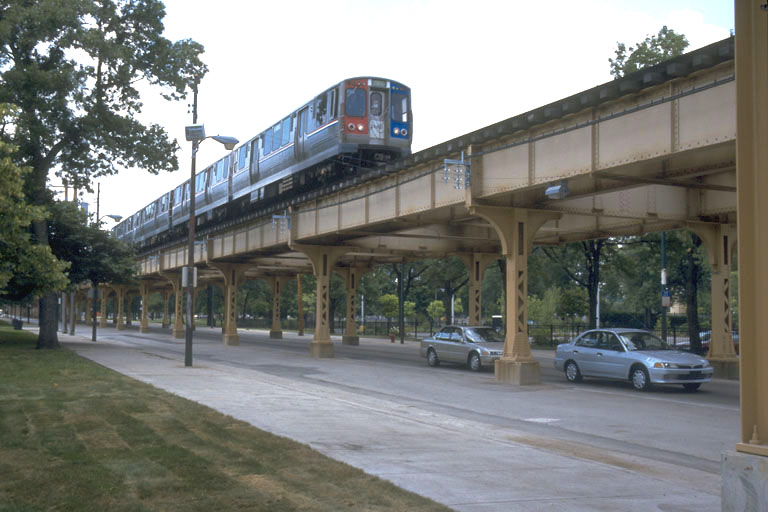
The first candidate I'd propose for the top slot is diffusion of responsibility stemming from a US obsession with localism. An MTA project might well be paid for by: the federal government, NY state, NYC, and bonds to be paid back by a dedicated tax in 10 downstate counties. There are contracting rules imposed by each of those sources. And it is administered by the MTA board, a monstrosity with appointments from eight different sources. The buck stops nowhere.
The second candidate is, paradoxically, the progressive era procurement rules designed to rein in corruption. They leave too little discretion. In a two sided competitive game, if one side is hampered in by slow changing inflexible rules the other side is going to dominate. That's exactly what happens. Government contractors play the system like a fiddle and there's little the government negotiators even when they are supremely competent and diligent can do about it.