To put this in perspective: world wide the emissions were ~ 37.8 billion tonnes (gigatonnes) in 2024 and 4.77 billion tonnes in the US. So, we're talking about 0.019 % of US emissions.
That's not nothing but also not that high relative to some other things. Addressing this is not going to do much to solve the overall problem that the US is emitting a lot of CO2. AI usage is probably going to grow over time. But it will have to grow a lot to get to displace e.g. transport, industrial heating, or agriculture as dominant sources of CO2 emissions.
Short term the tendency of AI data center providers to solve their energy needs with gas powered generation (mainly) is not great of course. It's opportunistic, there's extra underused gas generation capacity currently that's more or less readily available.
But long term there are some obvious cost savings there as well. Gas isn't cheap; even in the US. And gas turbines are actually scarce. Increased demand is hard to meet with just gas for this reason. AI data centers aren't picking the cheapest energy source but the easiest accessible energy source. Some companies are even looking at nuclear. And not because it's cheap. Likewise, some companies are apparently considering doing some AI compute in space (solar powered).
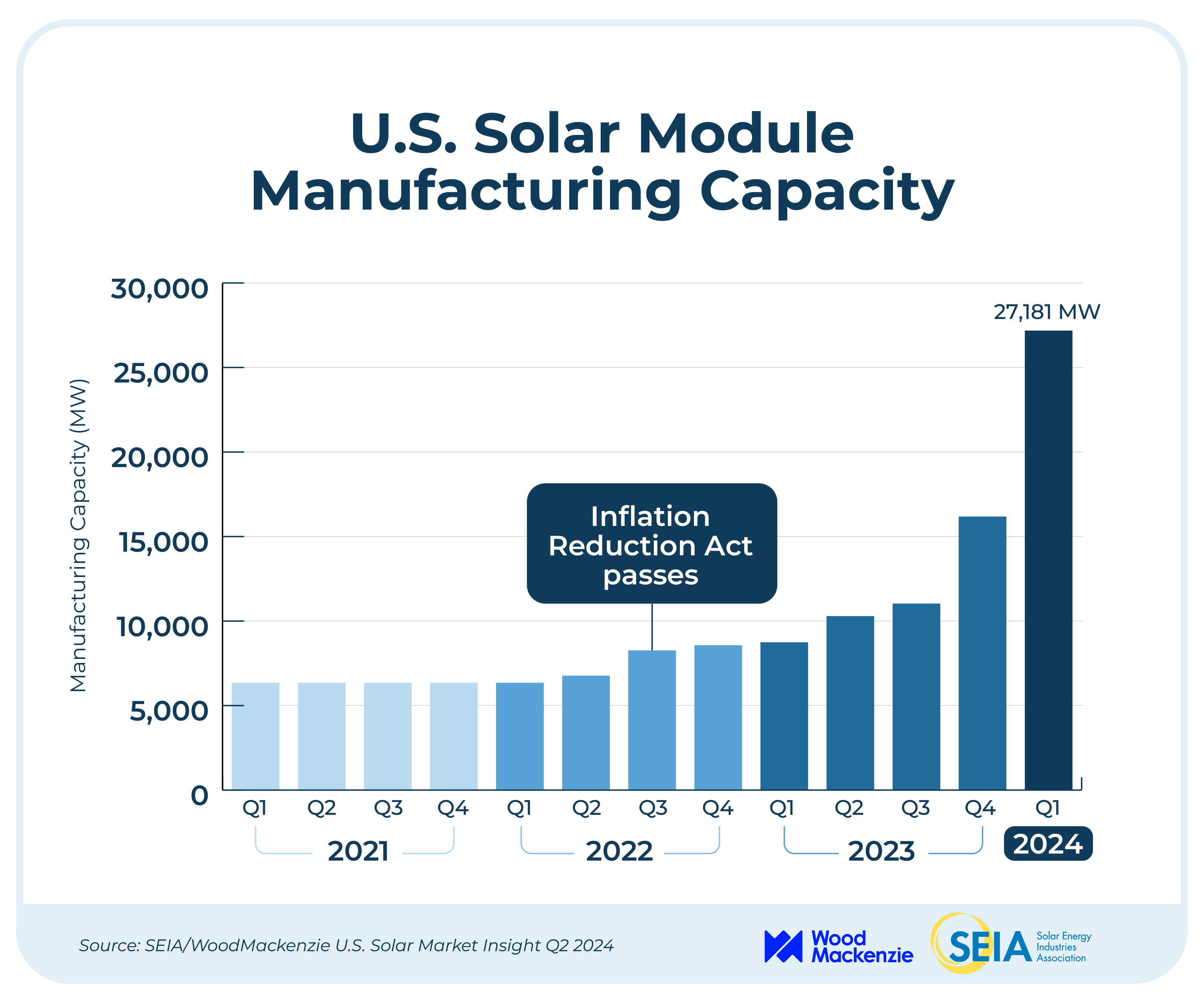
Long term, solar, wind, and batteries are likely to be the cheapest way to source energy in this sector as well as is already the case in other sectors. Energy is one of the largest cost components for providing AI compute and competition is likely to be fierce. There's no way that companies dependent on expensive forms of energy will be able to compete long term. The short term game is about grabbing market share. Surviving long term will require aggressive cost savings on energy generation.
I have an issue with this, and it's not the perspective. It's not the AI usage directly that's producing the CO2, it's the fact that we're generating energy from CO2-producing sources.
I have the same objection with the scaremongering titles "electric cars emit a ton of CO2! (If you assume they get all their energy from coal, anyway)".
Yes, cars use energy, AI uses energy, so do lots of other things. We should cut down on frivolous uses of energy, but we should definitely, immediately transition away from fossil fuels to clean sources of energy. Then the title would be "AI adds no CO2 because how would it?".
That’s assuming the numbers are accurate and in the ballpark, and I’m having a really hard time getting the numbers in the paper to add up. Do you believe them, or better yet, do you have other sources that support or confirm these numbers?
Just googling, what I get back is estimates that AI in 2024 already consumed over 200PJ, nearly 10x the number in the article, and is projected to double in the next few years. US electricity production is already ~25-30% of US CO2 emissions, and data centers are at least a quarter of that, and AI is now a huge driver of data center energy use. Data centers are using more than 4% of US electricity.
How is it possible that projected AI emissions are 0.019% from this one paper, while multiple other sources are estimating AI is already responsible for on the order of 2% of US emissions in 2024? I’m seeing a 100x discrepancy…
I don’t suspect the authors have intentionally downplayed either estimates, but a bunch of the paper’s data is old enough that it’s not useful for examining AI trends today. The energy use data is from 2016 and 2019. The energy use of inference is from GPT3 and usage numbers in 2023. The estimates of NVIDIA servers sold is from 2023. AI has exploded since then, and I suspect their estimates are off by orders of magnitude because AI usage has exploded in the last 2 years.
The author’s estimate of 28PJ of future AI energy use is based on a whole stack of assumptions in which small errors at every step can lead to very large errors in the estimate. That number is based on guesses of how automatable jobs are, and not on observations of the actual change in AI energy use today.
I did a quick chat gpt research fact check on this and did not find any obvious red flags. That's not a substitute for good research, obviously. I don't think it matters unless they are off by something outrageous like at least an order of magnitude. That would push it close enough to a one tenth of a percent that you could argue it's rivaling some of the more minor sources of emissions like aviation (2-3% I believe). You'd still be off by another order of magnitude. I don't have any reason to believe that that is the case. But please do share if you have other/better information.
I agree with you that reports like this typically have agendas and lots of little white lies, half truths, or assumptions that you might challenge. The question is are they overstating or understating the problem. And why. I can't judge that. I have my suspicions but I kept those out of my original comment; other of course than pointing out that based on the published numbers, this is does not seem like it actually is a very big problem.
Curious to hear what facts you verified with ChatGPT. I did provide some stats, and they’re sourced from the links I shared, and they do suggest 28PJ is off by an order of magnitude, and that the conclusion of 0.02% emissions might be off by as much as two orders of magnitude. What stats did you find that back up the paper’s summary?
From the technology review article:
“In analyzing both public and proprietary data about data centers as a whole, as well as the specific needs of AI, the researchers came to a clear conclusion. Data centers in the US used somewhere around 200 terawatt-hours of electricity in 2024, roughly what it takes to power Thailand for a year. AI-specific servers in these data centers are estimated to have used between 53 and 76 terawatt-hours of electricity. On the high end, this is enough to power more than 7.2 million US homes for a year.”
53 to 76 twh == 191 to 273 PJ, already used by AI in 2024
Maybe they're reporting only the inference energy usage, and not including the training and research phases? I'm just guessing here, I have no further knowledge nor desire to dig deeper, but it's the first thing that came to mind.
I give up on the clean energy narrative from America. If the goal is clean energy, then why are our leaders warning about Chinese EVs eating the world? EVs eating the world solves some part of the dirty energy problem. I don’t get it anymore, so, going to take my seat next to Carlin and just say ‘fuck it, planet will be fine’.
>I give up on the clean energy narrative from America. If the goal is clean energy, then why are our leaders warning about Chinese EVs eating the world?
Goomba fallacy[1]. Within the Democratic party at least, there are at least 3 camps with different reasons for supporting/opposing EVs:
1. environmentalists, who want to reach net zero ASAP
2. "made in America" types, who want to keep encourage/retain domestic manufacturing because they think they're a source of good blue collar jobs
> To put this in perspective: world wide the emissions were ~ 37.8 billion tonnes (gigatonnes) in 2024 and 4.77 billion tonnes in the US. So, we're talking about 0.019 % of US emissions.
Thank you for putting it in perspective. All of these headlines that quote isolated emissions numbers without anything to compare it to are deliberately useless. It’s meant to ride the wave of anti-data center and anti-AI outrage, not to be actually useful for forming an opinion.
It’s also unhelpful when data center emissions is compared to personal household use or cars. The real comparison should be to other industrial and commercial operations. If we started putting datacenter emissions in context with other processes like global shipping, aluminum production, or other industrial scale activities people would realize it’s not a problem. Journalists aren’t doing that, though, because they want to tap into the anti-data center outrage in the zeitgeist right now.
> All of these headlines that quote isolated emissions numbers without anything to compare it to are deliberately useless.
I would go beyond that and say that they're deliberately misleading.
They're not quoting a big scary-sounding number out of context to try and be unhelpful - it's an intentional and active choice to push a specific narrative.
There are actually a ton of problems with the energy use of AI data centers.
1. Exploiting local laws to basically pollute in essentially residential areas. This is what's happening with Grok's Memphis DC [1]. The gas turbines count as "mobile" so don't need the same pollution controls;
2. Domestic electricity production is heavily natural gas dependent. This is significantly better than coal but obviously not as good as renewables. But we are creating all this new demand for natural gas that is going to do nothing but drive up the price for everybody. This isn't just data centers. It's the policy of massively increasing LNG exports; and
3. For those DCs connected to the local grid, dthey are essentially getting residential customers to pay for the infrastructure and to subsidize the energy usage. Thing is, we've been here before [2].
So we have people with less income because company spend is moving to AI and the money those people have is being further eaten away by higher electricity prices. This is going to be a problem long before the CO2 emissions will be.
> 3. For those DCs connected to the local grid, dthey are essentially getting residential customers to pay for the infrastructure and to subsidize the energy usage
This is not the case for any well run utility. Commercial customers will pay their share and have their own rates.
Residential power rates are heavily regulated and require a lot of work and justification to raise.
The one case you’re citing appears to be some failure or perhaps corruption. It’s not a universal rule.
I don't know what to tell you other than this is well-established [1][2][3][4].
Also, what exactly is a "well run utility"? IMHO all utilities should be municipality or state owned. All privatization does is transfer wealth from the government and the not-wealthy to the already-wealthy. I suspect you might not agree however.
There are caps on how much utilities can charge but they're allowed to absorb capex (eg by building new transmission lines to a new DC) and if the utility has to buy electricity on the spot market because of increased demand (as was the case with crypto mining in upstate New York), then that raises the per-kWh cost of electricity for everyone, which is great in a cost-plus model.
We've seen this exact thing with healthcare insurance premiums. By law, a certain percentage of premiums has to be spent on giving care. Sounds good, right? So how do you, as an insurance company get around that? You push for higher premiums because that same percentage of profit now means more money. And how do you increase healthcare spend to keep that percentage intact? By spending with providers you also own.
>What about elsewhere? The Economist has adapted a model of state-level retail electricity prices from the Lawrence Berkeley National Laboratory to include data centres (see chart 2). We find no association between the increase in bills from 2019 to 2024 and data-centre additions. The state with the most new data centres, Virginia, saw bills rise by less than the model projected. The same went for Georgia. In fact, the model found that higher growth in electricity demand came alongside lower bills, reflecting the fact that a larger load lets a grid spread its fixed costs across more bill-payers.
Bloomberg's methodology seems to be "price rises are higher the closer to datacenters there are, so datacenters are causing price rises", but that seems like it's subject to all sorts of confounders, like those places being more desirable to live and therefore labor prices are higher.
>But we are creating all this new demand for natural gas that is going to do nothing but drive up the price for everybody. This isn't just data centers. It's the policy of massively increasing LNG exports; and
Can't you make the same argument about anything consuming a scarce resource? Airplanes suck they use oil and make gas prices more expensive for drivers! Amazon sucks because their delivery trucks use oil and make gas more expensive for drivers! Of course, you can argue that airplanes and amazon provide some sort of value and therefore it's worth the consumption/price rises, but that just ends up being a roundabout way of saying "I hate airplanes" or whatever.
This is going to be the problem with any new construction or infra project in general. If you buy a big plot of land for a new shoe factory - you will need energy, real estate and many other things which will drive prices up.
I'm seeing a big push back from just normal infra building but no one sees the other side - demand for AI is met. Taxes are paid. Jobs are secured.
At least a shoe factory will employ people and produce something people will buy. After a DC is built, it only needs a handful of people (compared to the capex) and as for its output? We just haven't seen AI create a service or product people really value and will pay for.
This is really the most alarming thing about the AI boom: it's so much like 2000 and the dot-com bubble because so many companies never had a business model or revenue let alone made a profit.
> We just haven't seen AI create a service or product people really value and will pay for.
That's not something you have to worry about because the risk is taken primarily by the companies themselves. ChatGPT has around 800 million weekly active users. That is humongous, considering such a new technology.
I wonder what your stance would be if the companies do start making profit and become rich through data centres. If that happens are you okay? Because I see that also a problem that people propose - companies getting too rich and extracting wealth. What’s the ideal situation?
In any case, I find this anti infra building a bit annoying if I may be direct. People want AI. Data centres are built to meet the demand. Profits are likely.
The likes of Google, Meta, Microsoft and Oracle will survive by cuttings costs (ie firing people) and probably getting bailed out by the government, either with direct loans or simply with government contracts.
We're already seeing massive increases in homelessness. Now imagine if unemployment goes to 8-10%. We had higher unemployment in Covid but the government opened the money faucet to avoid a complete collapse. Unemployment peaked at around 10% in the GFC and it was both a massive wealth transfer to the already-wealthy and a massive decrease in real wages as entry-level positions disappeared.
You don't spend trillions in corporate investment to have the bubble collapse and society not to feel the pain.
The pollution issue isn't really possible to solve without using a proper power plant with a tall stack on each unit.
The portable gas turbine units are already very efficient and have surprisingly good emissions controls. Especially the aero derived variety. The problem is dumping the exhaust at ~ground level. This can create hotspots of nitrogen oxides. Especially with so many units running at once. If you exhaust at 100'+, the chances of hazardous accumulation are negligible by comparison.
There's really no clean way to do this fast. You typically need FAA approval to build a stack that would be tall enough to be effective. The best hope for local residents is a rapid crash sometime soon.
As of 2023, there are approximately 285 million registered motor vehicles in the United States, with around 96.9 million of those being cars.[1]
180,000 additional cars is something like less than one tenth of the decrease in registered cars between 2022 and 2023. There were five million fewer registered cars in 2023 than 2022.
900,000 / 50 = 18,000
Which is … random statistic comparison, about the same number of households in Bakersfield CA that are female householder with no husband present (2010 census) [2].
If there’s an argument to be made that AI is putting a significant amount of CO2 in the atmosphere, it certainly isn’t either of these.
This is a terribly misleading comparison. Your CO2 emissions are more than your house and your car. Do you consume food that was farmed and shipped? Buy things that were made in a factory that produces emissions? Fly on airplanes?
Your personal CO2 emissions are more like a proportional fraction of global CO2 emissions. All of those factories and cargo ships and airplanes aren’t emitting CO2 just because. They’re doing it for individuals who buy those products and services, and therefore your household’s CO2 footprint is primarily external to the house itself.
If those are below average in CO2 emissions you would make the numbers worse though, and that seems pretty likely to me. Need to deport only rich immigrants owning more than one car.
Counting just private jet flight about 200 Elons (5kt CO2/y). Some people are even higher, and large yachts are worse than business jets I'd assume.
But I'd say that people tend to actually overestimate the share of super-rich; ten thousand normal US citizens emit more than a single billionaire, and there's not that many billionaires.
Deported people stop producing CO₂? Never heard that before. How does it work? Do they lose the ability to light a fire or drive a car once not in the US? And, presumably, they'd have to stop eating and breathing too?
It might be a tiny bit more feasible to convince 200000 households that they don't need a second car (or switch to electric ones), but mass murder would have a comparable effect on CO2 emissions, yes.
The paper is based on an estimate of productivity increases per industry due to AI. The highest increases are around 0.2% and most industries are <0.1%. In that world, AI isn't transformative and doesn't accelerate.
In some ways I think this is probably realistic, but it's not compatible with outcomes touted by boosters. They estimate 28 PJ/year, which is only about 0.9 GW. Stargate was planned to build 10 GW of capacity alone, so they can't both be true
I care a lot about the environment. It seems obvious that there is an impact, but it seems relatively small- something that if it wasn’t AI would be counted as a rounding error by many.
People keep raising AI’s environmental impact to me as a concern, and I’m open to learning more, but at this point it seems potentially even long term neutral if it really does insert the efficiencies to productivity that many claim it will.
For example: look up the co2 impacts of gas powered lawn equipment. By one number I found that in 2020 it released 30 million tons of co2 in the US alone. Yet, when this equipment was coming into popularity no one expressed the moral panic they are over AI.
I know people who will stomp around about how AI is bad, and then go use their gas powered leaf blower for a few hours.
This space is changing quickly, and their numbers are already outdated. In Pennsylvania they are building a 4.5GW gas-fired power plant specifically to power AI data centers:
Even if it does not provide base load (which the co-location with the AI data center suggests it may come close to), that single power plant will emit millions of tons of CO2 per year.
Wait, why is almost 60% of energy coming from fossil fuels called a good plan? It's close to bottom of the class among first-world countries, but even Poland (50% coal/15% gas/25% renewable) and Australia (45% coal/15% gas/35% renewable) have more renewable power in their mix. Excluding smaller countries like Finland (35% nuclear/25% wind/15% hydro), those looking for a better plan would be advised to copy from the UK's homework instead. Their electricity generation profile for 2024 [0]:
  35% wind
   6% solar
   2% hydro
  16% nuclear
   8% biomass
  30% gas
  <1% coal
And this is for the entire EU [1]:
  17.4% wind
  11.1% solar
  13.2% hydro
  23.7% nuclear
   5.5% biomass
  15.7% gas
   9.8% coal
   3.4% other
[0] https://www.neso.energy/news/britains-electricity-explained-... -- note that the original breakdown includes 14% imports, I recalculated the percentages to exclude those (most imports come from France, whose mix is 70% nuclear/25% renewable/5% gas)
Thanks for the info. That does look like a much better composition and obviously less CO2 for same energy. I've heard the US government plan is to do gas generation aggressively for next few years to bridge untile they get all the new nuclear power plants online.
And never mind a modern power grid vs an old one causing waste of 15-16%.
To be fair on fossil fuels, they are simply stored energy from the sun. You can think of them like a dense battery, more dense than our current battery technology allows.
> Sure, though there’s a difference between extracting energy stored for millions of years and capturing the continuous flow of energy from the sun.
The former is actually continuous, and thus far more reliable. The latter requires coming up with some other storage mechanism. Granted, we have ways to do this already. But it's still not a trivial project.
The availability of such large amounts of energy just delays our actions to make our energy use more efficient. We burn liters of gasoline to move a single person a few kilometers. This is not efficient and only made possible by fossil fuel energy abundance (for now, it's borrowed time).
Solar is so diffuse, just bringing it to where people need it has doubled the price purely in transmission infrastructure costs.
Reference: Australia - the place that’s supposed to be solar’s poster child has more than doubled electricity prices in the last three to four years because, unsurprisingly (we were warned), getting solar and wind to where they’re needed turns out to be incredibly expensive.
This means not running infra for half the day (and when the weather goes bad), halving the return on investment of anything relying only on solar. That's definitely a choice but not sure if people are ready for this. Of course storage solves this but storage sounds it is a bigger problem than "put solar everywhere you can".
What's important is the cost of the total electricity production apparatus, seasonal storage and transport included. (and environmental cost and availability, meaning fossil fuels should be avoided)
And, a similar argument could be made that "just a tiny bit of uranium can provide so much power, why are we not using it?" completely disregarding the infrastructure cost of nuclear. So this argument does not make much sense IMO.
(to be clear, I'm not saying we should not do anything, just that it's not as easy as it sounds)
We are getting to storage solutions already. But I think many of us think nuclear for base load and massively overbuilt solar and wind so that we can handle the full electrification of our system would be a net economic win as well as an environmental one.
Also, consider that we have a connected grid outside of Texas and that the weather is not usually bad everywhere.
The problem is that there isn’t any ”base load” when you’ve introduced renewables.
Take a look at the South Australian grid for a peek into the future. How would you introduce a nuclear baseload to this grid? Turn it off for days on end when renewables deliver?
No, but I'd laugh at them for using wood after discovering oil, the same way people will laugh at us for using oil 100 years after discovering solar/wind/geothermal/ocean/hydropower energies.
I think they will point to the growth rate of capability and squabble over alternative histories.
Eg. If China was a friendly nation to its neighbors, the world would be more comfortable subsidizing their manufacturing and building out solar faster.
https://share.google/images/fR5VmXmlygHn6yL2g
Or they will laugh at us trying to harness the sun in regions far from the equator, requiring a full fallback fossile infrastructure for winter time, while having a few moderns nuclear reactors would be more reliable and cost effective. Time will tell.
There's not much wrong with using fossil fuels but we should consider the tradeoffs here. It takes time and opportunity cost to spin up the infra required for solar energy so it is not practical to do it in an instant.
Globally, solar hasn’t even started to look like it might want to consider putting a dent in fossil fuel usage.
There are three big GHG emitting sectors, electricity, transport, and agriculture, and solar has only started to scratched the surface in a handful of countries electricity production.
The scale of solar / wind rollout necessary to make a significant impact globally is truly stupendous.
The study is a massive pile of guesses multiplied together, but one of the key assumptions I would point out is that AI data centers use the national average grid carbon intensity.
Our management now lets AI rank team members based on our weekly 1:1 documentation which consists of the team members pre-1:1 summary, the 1:1 transcript summary and the manager written response to the pre-1:1 summary.
Since my manager does not read any of that and wouldn't understand it even if he tried I can write down pretty much anything, making outrageous claims about my work and be happy about the highest salary increase in my team.
what are people not doing when they're using AI? google searches? web browsing? how many tons of co2 do website scrolljacking effects create by spiking my cpu?
As usual, any emissions headline that doesn’t include comparisons or perspective is simply trying to scare you.
For some perspective, air travel produces on the order of 1 billion tons of CO2 annually. In other words, this AI adoption CO2 number is 1/1000th of the CO2 emissions of air travel alone.
Anyone doing hand-wringing about AI CO2 emissions but not giving a second thought to major contributors like air travel or industrial processes that produce many orders of magnitude more CO2 isn’t actually concerned about CO2 emissions. They’re just looking for reasons to be angry about AI or data centers.
Also called “fake concern”. There are people who are threatened that AI can undo their status in society. These are the sorts that bring up ridiculous arguments against AI. Which is simultaneously useless to society but also extremely harmful. Simultaneously so costly to run that it is a bubble but also so cheap to run that so many data centers are not needed.
Then there are the pause AI sorts that try to cash in on regulatory politics.
I am not yet aware of an AI that is able to straight up remove hours out of a timeline. Time goes by pretty fast recently though, maybe AI is the reason?
[put my hand up]. I recently had to/wanted to convert my lecture slides from latex-beamer/lyx into html/reveal.js. I did a couple of slides per hand, and then asked AI to convert the rest, following my example. Saved me hours of tedious and boring work.
Don’t know why this is downvoted. AI helps in productivity in many places so it is definitely a fair point.
I run searches that otherwise would take 15 min in google. The energy to power the monitor for that much time itself is higher than one prompt that solved my search query.
Because it's wrong. AI doesn't save any CO2 or hours.
> AI helps in productivity in many places so it is definitely a fair point.
The productivity per hours might be higher, but the CO2 per hours is also higher, per definition. This isn't about productivity though, OP talked about CO2 emissions, and they can only rise, per capitalism's definition. If any company owner says "Okay we're doing a workday's work in an hour now, so now we'll just leave the office after one hour", then yes, we may save CO2. But this is not what's happening.
The hours still go by as fast as before, but instead of only having working humans, we have additional data centers that pollute the air.
In comparison to effectiveness, AI may (or may not, I saw studies that suggested otherwise) may reduce the CO2/LoC cost, but saying "AI saves CO2" is just entirely wrong and a misconception. It adds a massive amount of CO2. The rich people running the companies only earn money a little more faster than before.
> I run searches that otherwise would take 15 min in google. The energy to power the monitor for that much time itself is higher than one prompt that solved my search query.
But the time didn't go away. You consumed more energy in a smaller timeframe, but the rest of the 15 mins that you "saved" didn't go away. You probably did something else in there. So it just added CO2.
What if the goal of writing about how “AI is bad for the environment” (because of the energy and water it uses) is to identify gullible people and on-ramp them into a lifetime of media manipulation?
OTOH, what if the goal of downplaying the environmental risks is to try to make people gullible and stop caring and spend more of their money now and ignore the consequences, as industrialization has been doing for a couple of centuries?
I don't know how much a fully laden "large plane" weighs, but it's nowhere near 450,000 tons. Which means that the claim it releases 450,000 tons of CO2 on a single flight is clearly bollocks.


That's not nothing but also not that high relative to some other things. Addressing this is not going to do much to solve the overall problem that the US is emitting a lot of CO2. AI usage is probably going to grow over time. But it will have to grow a lot to get to displace e.g. transport, industrial heating, or agriculture as dominant sources of CO2 emissions.
Short term the tendency of AI data center providers to solve their energy needs with gas powered generation (mainly) is not great of course. It's opportunistic, there's extra underused gas generation capacity currently that's more or less readily available.
But long term there are some obvious cost savings there as well. Gas isn't cheap; even in the US. And gas turbines are actually scarce. Increased demand is hard to meet with just gas for this reason. AI data centers aren't picking the cheapest energy source but the easiest accessible energy source. Some companies are even looking at nuclear. And not because it's cheap. Likewise, some companies are apparently considering doing some AI compute in space (solar powered).
Long term, solar, wind, and batteries are likely to be the cheapest way to source energy in this sector as well as is already the case in other sectors. Energy is one of the largest cost components for providing AI compute and competition is likely to be fierce. There's no way that companies dependent on expensive forms of energy will be able to compete long term. The short term game is about grabbing market share. Surviving long term will require aggressive cost savings on energy generation.